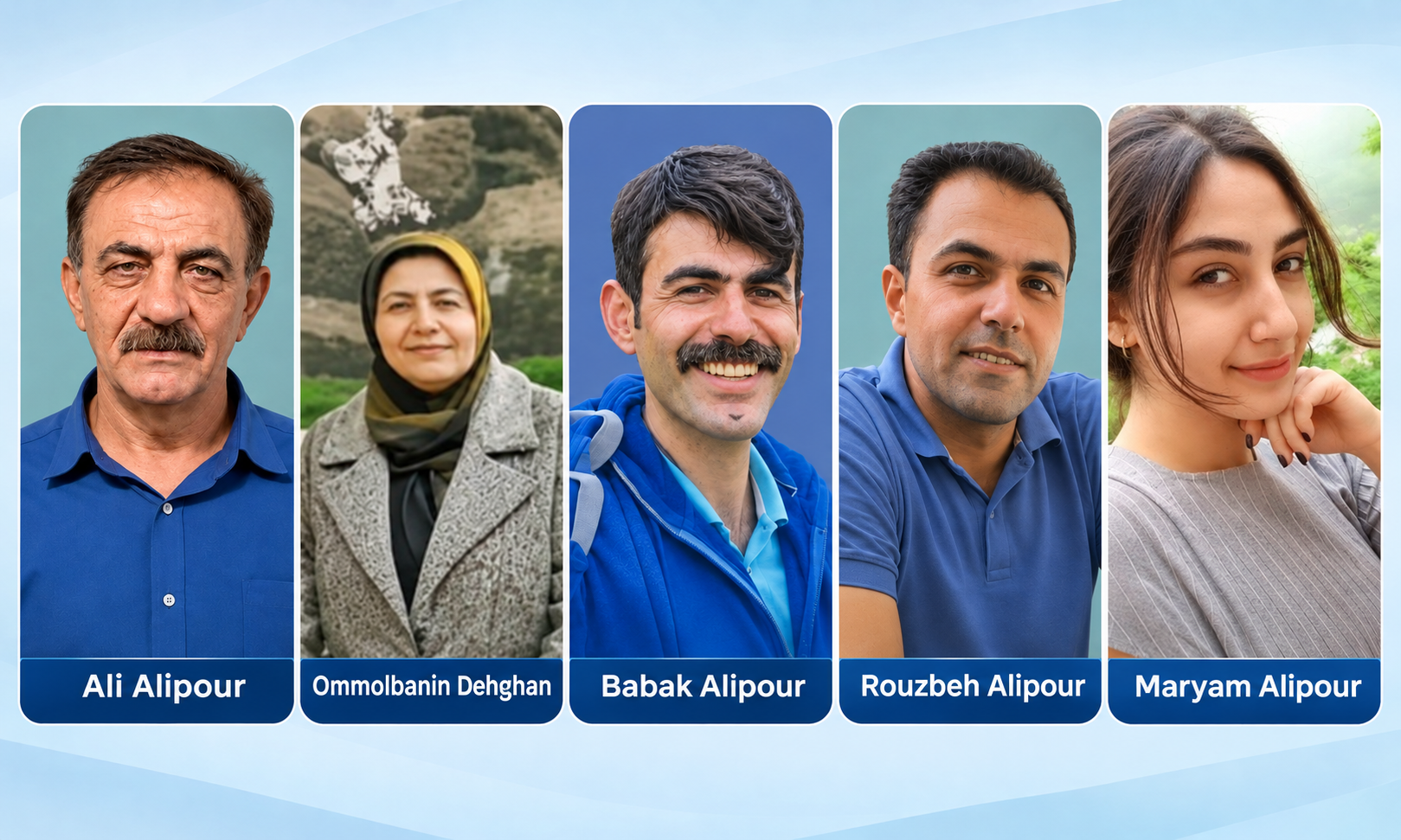
Ali Alipour, father of executed political prisoner Babak Alipour, has been transferred to Lakan Prison in Rasht following his arrest in October. His detention adds to a series of judicial and security measures affecting the Alipour family. This includes the continued imprisonment of another son and earlier arrests of Babak’s mother and sister.
Arrests and Allegations of Torture
On 26 January 2026, security forces arrested Babak’s brother, Rouzbeh Alipour, alongside his 63-year-old mother, and 31-year-old sister, in Tehran.
Iran Human Rights Monitor reports that Rouzbeh was severely beaten during detention, suffering fractures to his arms and legs, alongside injuries to his head and face.
Despite his injuries, he allegedly received inadequate medical treatment. He was subsequently transferred to Ghezel Hesar Prison in May, where he remains detained without a clearly established judicial outcome.
Meanwhile, the current circumstances of his mother and sister remain unclear, with no verified public information concerning their possible release or legal status.
Execution of Babak Alipour
Babak Alipour, a law graduate and political prisoner, was executed alongside Pouya Ghobadi at Ghezel Hesar Prison on 31 March 2026.
Both men had been convicted of armed rebellion in connection with alleged membership of the People’s Mojahedin Organization of Iran (PMOI/MEK).
Reports indicate that Babak’s family was denied a final visit before his execution. They also reportedly faced restrictions concerning the return of his body and information about his burial.
Growing Concerns Over Family-Based Repression
The repeated arrests and allegations of mistreatment affecting the Alipour family raise serious questions about the targeting of relatives of political prisoners.
International human rights standards prohibit arbitrary detention and torture, while guaranteeing fundamental rights to fair legal proceedings.
No family should face punishment or persecution simply because of its relationship to a political prisoner or an executed individual.
The circumstances surrounding the Alipour family highlight the need for independent scrutiny, transparent judicial proceedings, and accountability for any violations of their fundamental rights.