

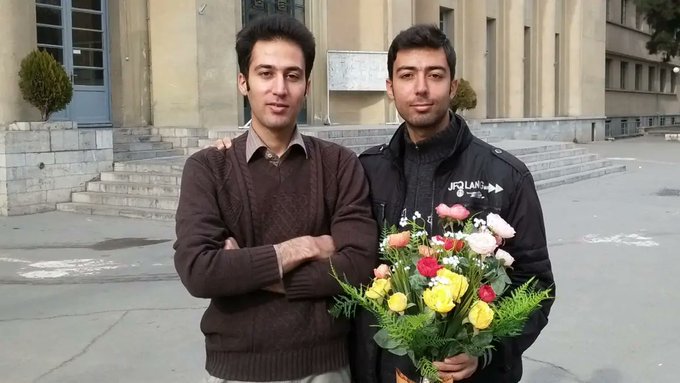
 Hamed Baniamerian (left), whose brother Vahid (right) was recently executed in Iran, spoke to The Sunday Times about the impact of his death on their family. Vahid, a 33-year-old electrical engineer, was executed at Ghezel Hesar prison near Tehran.
“I would have told him I love him, that I will miss him, that I didn’t want him to go,” Hamed said. “I always felt a sense of responsibility for my little brother. This is devastating for me.”
The family was denied a final visit, and they only learned of the execution through state media. Their parents, who live in western Iran, have still not been able to retrieve Vahid’s body for burial.
In the days following the execution, Vahid’s father travelled hundreds of miles to Tehran in search of answers, visiting police stations, prison offices and court buildings. Each time, he was turned away. After several days, he returned home without information.
“There was a steady stream of people coming to offer condolences,” Hamed said. “He dreamt of the liberation of Iran. We all thought of him as a hero.”
 The execution took place while the family was awaiting a Supreme Court ruling on his appeal. According to Hamed, the legal process could have been prolonged, potentially delaying the sentence.
Speaking from Denmark, where he lives with his family and works as a researcher, Hamed described his brother as “very brave to stand up against what he thought was wrong,” adding: “It is unbelievable that he is not among us any more.”
He suggested the execution reflects a broader pattern aimed at instilling fear and deterring public dissent amid heightened tensions inside Iran.
